Brand films are a powerful storytelling tool that companies use to connect with audiences. However, the approach to brand filmmaking differs significantly between China and the West due to cultural values, market dynamics, and audience expectations. Here’s a breakdown of the key differences:
Xpeng Motor Brand Film
1. Storytelling Approach
Chinese Brand Films: Often emphasize emotional storytelling, family values, and societal harmony. The narrative tends to be indirect, poetic, and sometimes philosophical, aiming to evoke deep emotions and a sense of national or cultural pride.
Western Brand Films: Lean more toward individualism, personal achievement, and direct storytelling. They often follow a clear narrative arc, with a protagonist overcoming challenges or showcasing a brand’s unique selling points more explicitly.
2. Cultural Themes & Symbolism
Chinese Films: Incorporate traditional symbols like dragons, lanterns, and elements of Confucianism, Taoism, or Buddhism. Concepts like “face” (reputation) and collectivism play a significant role.
Western Films: Use universal themes but often focus on innovation, adventure, or personal transformation. They tend to be more experimental with abstract visuals and humor.
3. Pacing & Visual Style
Chinese Films: Often slower-paced with lingering shots, symbolic imagery, and poetic narration. They prioritize aesthetics and mood-building over a fast-paced structure.
Western Films: Typically dynamic, with quick cuts, strong visual metaphors, and high-energy storytelling. Humor, wit, and fast-paced dialogue are more common.
4. Messaging & Branding
Chinese Brand Films: Subtle in their branding, sometimes featuring the product minimally or only revealing the brand at the end. They prioritize storytelling over direct advertising.
Western Brand Films: More direct in integrating the product or service into the story. While storytelling is key, the brand message is usually clearer and tied closely to the company’s values or mission.
5. Celebrity & Influencer Use
Chinese Films: Often feature well-known actors, singers, or influencers as brand ambassadors, leveraging their star power to attract audiences. The influence of KOLs (Key Opinion Leaders) is significant.
Western Films: While celebrity endorsements exist, there is a growing trend toward featuring real people, employees, or customers for authenticity and relatability.
6. Market Adaptation
Chinese Films: Adapt to government regulations and censorship laws, ensuring messages align with national values. They often subtly include patriotic undertones.
Western Films: More freedom in messaging, with brands taking bold stances on social and political issues, such as diversity, sustainability, or equality.
H&H Group Brand Film
Conclusion
Both Chinese and Western brand films aim to captivate audiences, but their approaches reflect their cultural foundations. Chinese brand films prioritize emotional resonance, collectivist values, and aesthetics, while Western brand films focus on individuality, innovation, and direct storytelling. Understanding these differences helps brands create effective campaigns that resonate with their target audiences in different markets.
When working on video production in China, efficiently transferring large footage files to global teams can be challenging due to internet restrictions and slow international transfer speeds. Below are some commonly used cloud storage and file transfer services that work well in mainland China and their key differences:
1. China-Based Cloud Solutions (Fast in China, Limited Globally)
These platforms are optimized for local use and offer fast upload speeds but may have slower international access.
Service
Free Plan
Paid Plan (Monthly/Annual)
Pros
Cons
Baidu Wangpan (百度网盘)
2TB (Free but slow speed)
¥30/month ($4) or ¥298/year ($42)
Large storage, affordable
Slow speeds for free users, international transfers limited
Tencent Weiyun (腾讯微云)
10GB Free
¥20/month ($3) or ¥198/year ($28)
Integration with WeChat, cheap
Limited international access
Alibaba Cloud Drive (阿里云盘)
100GB Free
¥30/month ($4) or ¥288/year ($40)
Good speed in China, reliable
No global access, expensive for larger storage
2. Cross-Border Cloud Solutions (Moderate Speeds in China & Globally Accessible)
These services are accessible in China and worldwide but may require VPNs for faster global transfers.
Service
Free Plan
Paid Plan (Monthly/Annual)
Pros
Cons
WeTransfer
2GB per transfer
Pro: $12/month (1TB)
Easy to use, no login needed
Limited free plan, slow in China
MASV
Pay-as-you-go
$0.25/GB, or $40/month unlimited
No file size limit, fast
Expensive for large projects
Tencent COS (腾讯云对象存储)
Pay-per-use
¥0.12/GB (~$0.02/GB)
Business-level, scalable
Requires setup, best for enterprises
3. Global Cloud Solutions (Reliable Worldwide, Slow in China Without VPN) These platforms are widely used worldwide but may be slower or blocked in China.
Service
Free Plan
Paid Plan (Monthly/Annual)
Pros
Cons
Google Drive
15GB Free
$9.99/month (2TB)
Global collaboration
Blocked in China without VPN
Dropbox
2GB Free
$9.99/month (2TB)
Secure, widely used
Blocked in China without VPN
OneDrive (Microsoft)
5GB Free
$6.99/month (1TB)
Works better in China than Google
Slower speeds in China
Best Choice for Video Producers in China
For Local Productions in China:Baidu Wangpan / Tencent Weiyun (affordable & fast, but limited for international transfers).
For Cross-Border Transfers:WeTransfer / MASV (higher cost, but efficient for one-time use).
For Global Teams:Google Drive / Dropbox / OneDrive (only viable if using a VPN in China).
Pro Tips
Here are the cloud storage solutions our team relies on:
For local use in China → Baidu Wangpan
For cross-border sharing → Wetransfer
For instant proxy sharing → Atomos Cloud + Ninja/Shogun Connect
In today’s globalized media landscape, international businesses frequently partner with Chinese video production companies to create content tailored for the Chinese market or to leverage China’s extensive production resources. With China’s booming media industry and state-of-the-art production capabilities, collaborations between international and Chinese companies are more common than ever. However, successful partnerships require a deep understanding of local regulations, cultural nuances, and logistical challenges.
1. Understanding the Market & Cultural Sensitivities
China’s media landscape is unique, with distinct cultural values, censorship policies, and audience preferences. International companies must work closely with local production teams to ensure their content aligns with these factors. Whether it’s adapting storytelling techniques, selecting appropriate talent, or navigating sensitive topics, working with an experienced Chinese production company helps bridge the cultural gap and craft content that resonates with local audiences.
2. Navigating Legal and Regulatory Requirements
China has strict regulations governing video production, distribution, and foreign collaborations. Permits are required for filming in many locations, and certain types of content are subject to approval from government authorities. Partnering with a Chinese production company that understands the legal framework ensures a smooth workflow, avoiding unnecessary delays and compliance issues.
3. Access to High-Quality Production Resources
China offers world-class studios, equipment rental services, and skilled professionals across all aspects of production. Whether it’s high-end cinematography, CGI, or animation, international businesses can access state-of-the-art technology by working with established Chinese production companies. Additionally, local fixers and logistics teams help streamline operations for foreign crews unfamiliar with the industry landscape.
4. Language and Communication Challenges
Language barriers can be a challenge, a few Chinese production companies have bilingual teams that facilitate smooth communication. Clear project briefs, detailed shot lists, and well-defined deliverables are crucial for ensuring expectations align on both sides. Utilizing translators or hiring a bilingual production coordinator can further enhance collaboration efficiency.
5. Budgeting and Payment Considerations
Financial transactions between international clients and Chinese companies require careful planning. Some vendors accept only local currency (CNY) and prefer payments through platforms like WeChat Pay or Alipay. Understanding these financial nuances and setting up appropriate payment methods in advance helps prevent delays in the production process.
6. Efficient Logistics and Scheduling
China’s vast geography presents logistical challenges, from transportation to accommodation and location permits. Local production companies handle these complexities, ensuring smooth execution from pre-production to post-production. They also provide valuable insight into optimal shooting schedules, avoiding peak seasons or unfavorable weather conditions.
Conclusion
Collaborating with a Chinese video production company can be a rewarding experience for international businesses looking to tap into China’s market or leverage its high-quality production capabilities. By understanding cultural nuances, legal requirements, and logistical considerations, businesses can forge successful partnerships that result in impactful, locally relevant content. With the right team in place, international companies can navigate the complexities of production in China and bring their creative visions to life seamlessly.
Looking for reliable and professional video production services in China? Pixel Productions China is your ultimate partner, offering top-notch video production solutions tailored to your needs. As a leading China video fixer (Video Production Coordinator), we specialize in providing comprehensive services to ensure that your production process runs smoothly from start to finish. Whether you are a local brand or an international production house, our expertise and dedication to quality have made us the go-to choice for the world’s most respected brands.
Experience the difference with Pixel Productions China, where customer satisfaction and exceptional service are our top priorities. Contact us today and let us handle all the logistics, permitting, and on-ground support you need to bring your vision to life in China.
If you are looking for afixer in the Hangzhou, China, you have come to the right place! We have a lot of experience filming in Hangzhou, all across from event, documentary, corporate to commercial. We can help you with information about your travel documents, and obtain your film permits and equipment at a discount. Our Fixers will help you warm up to the locals, prepare for the weather, and tell you all the official and unofficial information to adapt the culture nuances.
Visa for China
Hangzhou offers a 144-hour transit visa exemption for travelers from over 50 countries, making short visits convenient. If your stay in China exceeds one week, you can apply for a tourist visa. Alternatively, we can assist you in securing a J2 visa—the only legal visa for filming in China—highly recommended for shooting in public spaces.
Film Permits in Hangzhou
Obtaining film permits in Hangzhou is a well-organized process. Each local area has its own permitting rules including several different documents being required.
Filming architecture is not copyrighted in Hangzhou so filming is not subject to the same artists’ rights issues as architecture in Europe.
As your fixer in Hangzhou, we must tell you that drone filming is not allowed above ports, train stations, government offices, military bases, within 30KM of major airports.
Special equipment renting info
China has a great depth of suppliers offering all equipment imaginable. Highly specialized equipment is found in Shanghai, Beijing & Hong Kong.
If you plan to bring film equipment into China, it’s important to declare it to China Customs in advance. For highly professional equipment, obtaining a J2 visa may be necessary to ensure a smooth entry into the country.
Cultural facts
Chinese people are generally warm and friendly towards foreigners. However, they may feel a little shy or uneasy when faced with a camera. Rest assured, our experienced fixers will guide you, ensuring that your production remains both respectful and authentic.
Weather when filming in Hangzhou
Hangzhou, located in eastern China, has a humid subtropical climate with four distinct seasons. Here’s a breakdown of the weather throughout the year:
Spring (March to May): Spring in Hangzhou is mild and comfortable, with temperatures ranging from 10°C to 20°C (50°F to 68°F). The weather is generally pleasant, with occasional rain showers. This is a great time to visit as the city’s gardens and parks are filled with blooming flowers, and the weather is ideal for outdoor activities.
Summer (June to August): Summers in Hangzhou can be hot and humid, with temperatures often reaching 30°C to 35°C (86°F to 95°F), and the high humidity makes it feel even hotter. The monsoon season also brings heavy rainfall, especially in June and July, leading to thunderstorms and frequent downpours. Despite the heat, Hangzhou’s West Lake area offers a refreshing escape.
Autumn (September to November): Autumn is considered one of the best times to visit Hangzhou. The weather is cool and comfortable, with temperatures ranging from 15°C to 25°C (59°F to 77°F). The humidity decreases, the skies are often clear, and there’s less rainfall, making it ideal for sightseeing and enjoying the natural beauty of the city.
Winter (December to February): Winters in Hangzhou are relatively mild compared to northern China, with temperatures ranging from 3°C to 10°C (37°F to 50°F). Snow is rare, but the weather can feel damp and chilly due to high humidity. Overcast skies and occasional light rain or drizzle are common during this time.
In summary, Hangzhou enjoys mild, comfortable weather in spring and autumn, hot and humid summers, and cool, damp winters. The best times to visit are during the spring and autumn months when the weather is most pleasant for outdoor exploration.
Pixel Production China: Your Trusted Fixer for Hangzhou Productions
At Pixel Production China, we’ve spent over a decade helping international filmmakers turn their visions into reality across the dynamic landscapes of China. With our bilingual team, we bridge the gap between your creative ambitions and the rich filmmaking opportunities Hangzhou has to offer.
Here’s what we bring to the table:
Exceptional Location Scouting: From the city’s bustling streets to serene hidden corners, we’ll find the perfect backdrop.
Seamless Permit Assistance: Forget about red tape—we’ll handle all the necessary paperwork.
Authentic Talent Casting: Enhance your project with the ideal cast to bring your story to life.
Top-Tier Equipment Rental: Gain access to cutting-edge gear for a polished production.
Comfortable Crew Arrangements: We’ll take care of accommodations to keep your team refreshed and ready.
Professional Crew Assembly: From directors to lighting experts, we gather the best talent in Hangzhou and beyond.
Post-Production Expertise: Need editing or visual effects? We’ve got you covered.
Round-the-Clock Support: Day or night, we’re here to tackle any challenges that come your way.
We can help you with all the administrative stuff, in order to have you focus on the creative part of your production. Leave the film permits to us and we will have it ready and filed to be close at hand during shooting by the time you arrive. Ask us about the amounts in tax rebates that we save customers like yourself.
Let’s Make Your Hangzhou Photo or Video Project Unforgettable!
If you are looking for afixer in the Foshan, China, you have come to the right place! We have a lot of experience filming in Foshan, all across from event, documentary, corporate to commercial. We can help you with information about your travel documents, and obtain your film permits and equipment at a discount. Our Fixers will help you warm up to the locals, prepare for the weather, and tell you all the official and unofficial information to adapt the culture nuances.
Yunbao Product Shoot, 2021
Yunbao Electric Cupper
Visa for China
Guangzhou is a city 1 hour drive from Foshan, which provides a 144-hour transit visa exemption for travelers from over 50 countries, making short visits convenient. If your stay in China exceeds one week, you can apply for a tourist visa. Alternatively, we can help you secure a J2 visa—the only legal visa for filming in China—highly recommended for shooting in public spaces.
Film Permits in Foshan
Obtaining film permits in Foshan is a well-organized process. Each local area has its own permitting rules including several different documents being required.
Filming architecture is not copyrighted in Foshan so filming is not subject to the same artists’ rights issues as architecture in Europe.
As your fixer in Foshan, we must tell you that drone filming is not allowed above ports, train stations, government offices, military bases, within 30KM of major airports.
Special equipment renting info
China has a great depth of suppliers offering all equipment imaginable. Highly specialized equipment is found in Shanghai, Beijing & Hong Kong.
If you plan to bring film equipment into China, it’s important to declare it to China Customs in advance. For highly professional equipment, obtaining a J2 visa may be necessary to ensure a smooth entry into the country.
Cultural facts
Chinese people are generally warm and friendly towards foreigners. However, they may feel a little shy or uneasy when faced with a camera. Rest assured, our experienced fixers will guide you, ensuring that your production remains both respectful and authentic.
Weather when filming in Foshan
Foshan, located in southern China near Guangzhou in the Pearl River Delta region, has a humid subtropical climate with warm weather year-round. Its seasons are defined by variations in temperature and rainfall. Here’s a breakdown of Foshan’s weather:
Spring (March to May): Spring in Foshan is warm and increasingly humid, with temperatures ranging from 17°C to 27°C (63°F to 81°F). Rainfall begins to increase, especially in April and May, bringing light to moderate showers and occasional thunderstorms. Foggy mornings are common during this season.
Summer (June to August): Summers in Foshan are hot, humid, and rainy, with temperatures often reaching 25°C to 34°C (77°F to 93°F). This is the peak of the monsoon season, characterized by heavy rainfall, thunderstorms, and occasional typhoons. The high humidity can make it feel even hotter, but evening breezes sometimes provide relief.
Autumn (September to November): Autumn is one of the most comfortable seasons in Foshan. Temperatures range from 20°C to 30°C (68°F to 86°F), and the humidity decreases significantly. Rainfall becomes less frequent, and the skies are typically clear, making this an ideal time for outdoor activities and exploring the city’s cultural and historical attractions.
Winter (December to February): Winters in Foshan are mild and relatively dry, with temperatures ranging from 12°C to 20°C (54°F to 68°F). Snow and frost are rare, but occasional cold fronts can bring slightly cooler weather. The season is generally sunny and pleasant, making it comfortable for outdoor activities.
Summary: Foshan’s climate is warm year-round, with hot, humid summers and mild, dry winters. Spring and autumn are the best times to visit, offering moderate temperatures and less extreme weather conditions. Summer brings significant rainfall, while winter provides a cool but comfortable respite from the heat.
JPCI Branded Content, 2021
JPCI Branded Film
Pixel Production China: Your Trusted Fixer for Foshan Productions
At Pixel Production China, we’ve spent over a decade helping international filmmakers turn their visions into reality across the dynamic landscapes of China. With our bilingual team, we bridge the gap between your creative ambitions and the rich filmmaking opportunities Foshan has to offer.
Here’s what we bring to the table:
Exceptional Location Scouting: From the city’s bustling streets to serene hidden corners, we’ll find the perfect backdrop.
Seamless Permit Assistance: Forget about red tape—we’ll handle all the necessary paperwork.
Authentic Talent Casting: Enhance your project with the ideal cast to bring your story to life.
Top-Tier Equipment Rental: Gain access to cutting-edge gear for a polished production.
Comfortable Crew Arrangements: We’ll take care of accommodations to keep your team refreshed and ready.
Professional Crew Assembly: From directors to lighting experts, we gather the best talent in Foshan and beyond.
Post-Production Expertise: Need editing or visual effects? We’ve got you covered.
Round-the-Clock Support: Day or night, we’re here to tackle any challenges that come your way.
We can help you with all the administrative stuff, in order to have you focus on the creative part of your production. Leave the film permits to us and we will have it ready and filed to be close at hand during shooting by the time you arrive. Ask us about the amounts in tax rebates that we save customers like yourself.
Let’s Make Your Foshan Photo or Video Project Unforgettable!
This ranking is based on insights gathered from our projects and extensive research conducted with the help of AI tools like Deepseek, ChatGPT, and Grok. Focusing on the needs of corporate and documentary productions, we’ve curated a list of the most popular cinema cameras in 2024. These cameras are not only selected for their ability to deliver high-quality visuals, portability, and versatility but also for their availability in the Chinese rental market. Whether you’re filming a corporate promo, a documentary, or any professional video project, this guide highlights the best and most accessible tools to bring your vision to life, and you can easily rent them in China.
1. Sony FX6
Why it’s popular: The FX6 is widely used in higher-end documentary productions for its full-frame sensor, autofocus capabilities, and adaptability in various shooting conditions.
Key features: 4K 120fps, dual base ISO, and built-in ND filters.
2. Sony FX3
Why it’s popular: The FX3 is a top choice for documentaries due to its compact size, full-frame sensor, and excellent low-light performance. It’s ideal for run-and-gun shooting and delivers a cinematic look.
Key features: 4K 120fps, dual base ISO, and built-in stabilization.
3. Blackmagic Pocket Cinema Camera 6K Pro
Why it’s popular: Known for its affordability and cinematic image quality, the BMPCC 6K Pro is a favorite among independent documentary filmmakers.
Why it’s popular: While primarily known for its stabilization, the Ronin 4D is increasingly used in documentaries for its integrated camera system and ability to capture smooth, dynamic shots.
Key features: Full-frame sensor, 6K/8K options, and built-in gimbal stabilization.
5. Red Komodo-X
Why it’s popular: The Komodo features a Super 35mm 6K Global Shutter sensor, which eliminates rolling shutter artifacts and is ideal for fast-moving scenes or action shots.
Key features: It records in RED’s proprietary REDCODE RAW format, offering high dynamic range and flexibility in post-production.
6. Canon EOS C70
Why it’s popular: Designed for video-centric workflows, the C70 is lightweight, has reliable autofocus, and offers excellent image quality, making it perfect for documentary filmmakers.
Key features: Super 35mm sensor, 4K 120fps, and Canon’s color science.
7. ARRI Alexa Mini LF
Why it’s popular: The Alexa Mini LF is a staple in high-end productions due to its large format sensor, exceptional dynamic range, and cinematic image quality. It’s frequently rented for feature films, high-budget commercials, and TV dramas.
Key features: Large format sensor, ARRI color science, and compact design.
8. RED V-Raptor 8K VV
Why it’s popular: Known for its high resolution and versatility, the RED V-Raptor is a favorite for productions requiring 8K footage or high-frame-rate capabilities, such as action films and VFX-heavy projects.
Key features: 8K resolution, global shutter, and modular design.
9. Canon EOS C500 Mark II
Why it’s popular: Its modular design and full-frame sensor make it a versatile option for a variety of productions, including commercials, documentaries, and independent films.
Key features: 5.9K resolution, Canon color science, and compact form factor.
10. Sony FX9
Why it’s popular: The FX9 is a popular choice for documentaries, TV shows, and corporate videos due to its full-frame sensor, autofocus capabilities, and ease of use.
Key features: 6K full-frame sensor, dual base ISO, and built-in ND filters.
Trends in Corporate and Documentary Video Production in China (2024):
4K is the standard: Most documentaries are shot in 4K to meet client expectations for high-quality deliverables. Cameras like the RED V-Raptor 8K and Blackmagic URSA Mini Pro 12K are rented for projects requiring future-proof resolution.
Run-and-gun setups: Compact and lightweight cameras like the Sony FX3 and Canon C70 are preferred for their portability.
Local brands gaining traction: Cameras like the Kinefinity MAVO Edge are becoming more popular due to their affordability and support for local filmmakers.
Hybrid workflows: The DJI Ronin 4D is increasingly rented for its unique combination of camera and stabilization in one system.
Looking for reliable and professional video production services in China? Pixel Productions China is your ultimate partner, offering top-notch video production solutions tailored to your needs. As a leading China video fixer (Video Production Coordinator), we specialize in providing comprehensive services to ensure that your production process runs smoothly from start to finish. Whether you are a local brand or an international production house, our expertise and dedication to quality have made us the go-to choice for the world’s most respected brands.
Experience the difference with Pixel Productions China, where customer satisfaction and exceptional service are our top priorities. Contact us today and let us handle all the logistics, permitting, and on-ground support you need to bring your vision to life in China.
Hong Kong and Macau are two of the most visually striking and culturally rich locations for filmmaking in Asia. From the neon-lit skyline of Hong Kong to the European-influenced streets of Macau, these cities offer unique backdrops for commercial, documentary, and feature film productions. However, while they are more accessible than mainland China in terms of regulations and infrastructure, foreign filmmakers still face various challenges when shooting in these regions. Understanding these obstacles in advance can help ensure a smooth production.
1. Permits and Regulations
Unlike mainland China, Hong Kong and Macau have relatively relaxed filming regulations. However, certain restrictions and bureaucratic processes can still cause delays.
Public Filming Permits: While small productions with handheld cameras may not require a permit, larger shoots, especially those involving tripods, drones, or street closures, typically need approval from the relevant authorities (e.g., the Film Services Office in Hong Kong).
Private Locations: Many high-profile areas, such as malls, office buildings, and some heritage sites, require direct permission from property owners or government offices.
Drone Restrictions: Hong Kong has strict drone laws, requiring registration and certification for commercial drone usage. Macau has even more stringent restrictions, with many areas completely off-limits to drones.
Solution: Work with a local fixer or production company that understands the permit process and can secure approvals efficiently.
Corporate Production for TMS Design, Hong Kong, 2023
2. Crowded and Limited Filming Spaces
Hong Kong and Macau are densely populated, making it challenging to secure quiet and open spaces for filming.
Hong Kong’s Congested Streets: The city’s compact urban layout means that finding a filming location without foot traffic interruptions is difficult.
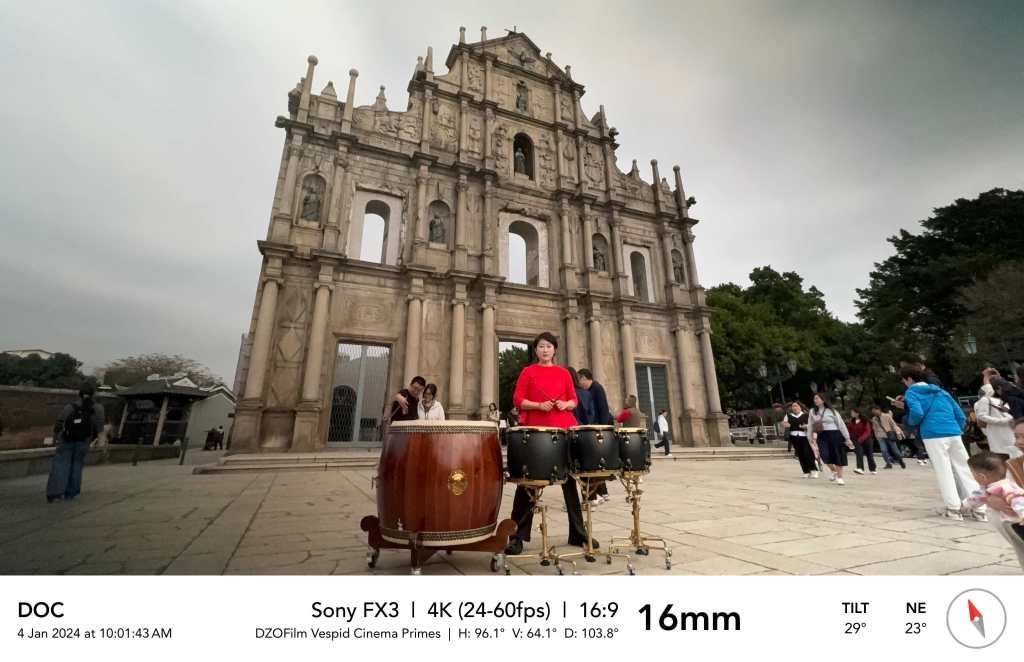
Macau’s Tourist Hotspots: As a major tourist destination, Macau’s scenic spots—like Senado Square and the Ruins of St. Paul’s—are often packed with visitors, making controlled filming complicated.
Solution: Plan shoots during off-peak hours, secure necessary permits for crowd control, and consider using private locations when possible.
3. Weather and Unpredictable Conditions
The subtropical climate of Hong Kong and Macau means filmmakers must be prepared for sudden weather changes.
Humidity and Heat: Summers can be extremely humid, causing challenges for both crew and equipment.
Typhoon Season: From May to October, typhoons can disrupt production schedules, causing delays or cancellations.
Fog and Air Pollution: During certain times of the year, heavy fog can obscure skyline shots, and air quality fluctuations may affect outdoor shoots.
Solution: Monitor weather forecasts closely, have contingency plans for indoor locations, and schedule buffer days in case of delays.
4. High Production Costs
While Hong Kong and Macau offer world-class facilities, production costs can be significantly higher than in mainland China.
Crew and Talent Fees: Local crew rates tend to be more expensive due to the high cost of living.
Location Fees: Renting private locations, especially in premium districts, can be costly.
Accommodation and Transport: Hotels and transportation costs add up quickly, especially for extended shoots.
Solution: Budget carefully, hire a local fixer to negotiate better rates, and consider sourcing some crew and services from neighboring cities like Shenzhen for cost efficiency.
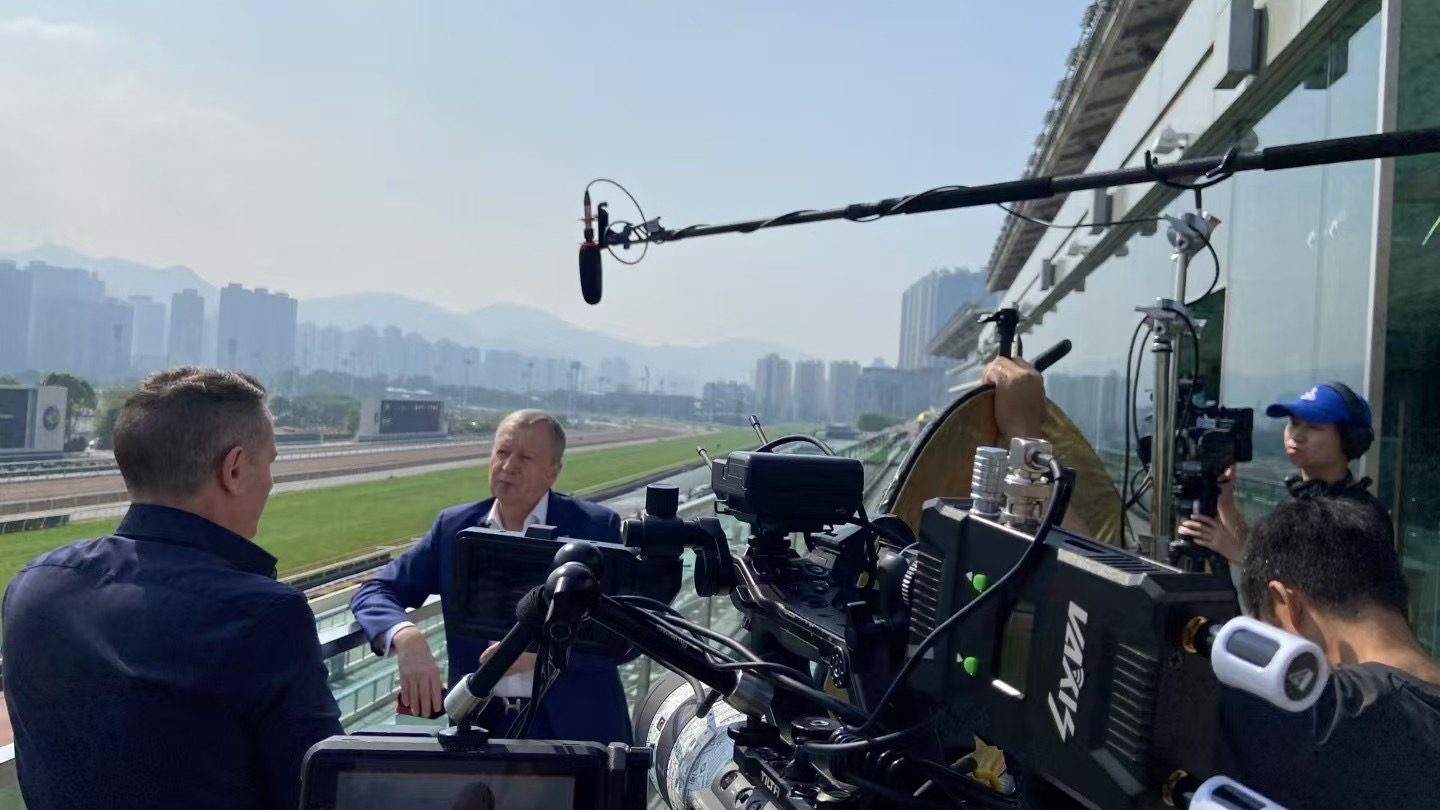
Documentary Productions for TVNZ, Hong Kong, 2024
5. Language and Cultural Barriers
While English is widely spoken in Hong Kong, Macau primarily uses Cantonese and Portuguese, which may pose a challenge when dealing with local vendors and authorities.
Technical and Legal Documents: Many permit applications and official documents are in Chinese or Portuguese.
Cultural Nuances: Business etiquette and negotiation styles differ from Western norms, and understanding local expectations can impact production efficiency.
Solution: Have a bilingual production coordinator or fixer to handle communication and documentation.
6. Limited Equipment Availability in Macau
While Hong Kong has a well-established film industry with access to top-tier rental houses, Macau has more limited options.
Importing Equipment: Macau has fewer rental facilities, so productions often need to bring gear from Hong Kong or mainland China.
Customs Considerations: Moving equipment between these regions may involve customs declarations and import taxes.
Solution: Plan ahead for equipment rentals in Hong Kong and arrange proper transport for gear into Macau.
7. Bureaucratic Hurdles and Political Sensitivities
Although Hong Kong and Macau operate under the “One Country, Two Systems” framework, political sensitivities can still impact film production.
Censorship Concerns: While regulations are looser than in mainland China, politically sensitive topics may still face scrutiny, particularly for distribution.
Visa and Work Permits: Foreign crews may need the proper work permits depending on the nature and length of the production.
Solution: Avoid politically sensitive topics unless fully aware of the implications, and ensure all crew members have the appropriate visas.
Conclusion
Filming in Hong Kong and Macau presents unique opportunities but also comes with its share of challenges, from navigating permits and dealing with high costs to managing unpredictable weather and crowded locations. However, with proper planning, local support, and flexibility, filmmakers can successfully capture the stunning visuals and dynamic energy these cities offer.
If you’re planning a production in Hong Kong or Macau, partnering with experienced local fixers and production teams can make all the difference in ensuring a seamless and efficient shoot.
Looking for reliable and professional video production services in China? Pixel Productions China is your ultimate partner, offering top-notch video production solutions tailored to your needs. As a leading China video fixer (Video Production Coordinator), we specialize in providing comprehensive services to ensure that your production process runs smoothly from start to finish. Whether you are a local brand or an international production house, our expertise and dedication to quality have made us the go-to choice for the world’s most respected brands.
Experience the difference with Pixel Productions China, where customer satisfaction and exceptional service are our top priorities. Contact us today and let us handle all the logistics, permitting, and on-ground support you need to bring your vision to life in China.
China is an exciting and dynamic place to film, offering a diverse range of locations, modern production facilities, and a growing entertainment industry. However, for foreign crews, navigating the complexities of video production in China comes with its own set of challenges. From strict regulations to logistical hurdles, understanding these obstacles can make the difference between a smooth shoot and a production nightmare. Let’s break down the main challenges and how to overcome them.
1. Film Permits and Regulations
One of the biggest hurdles for video production in China is obtaining the necessary permits. Unlike some countries where filming in public places is relatively straightforward, China requires official approval for most productions, especially for foreign crews.
Filming in public spaces, heritage sites, or sensitive locations requires special permits.
Government regulations often dictate what content is permissible, meaning certain political, cultural, or social topics may face restrictions.
Applying for permits can be time-consuming, and approval is never guaranteed.
Solution: Work with a local production fixer or company familiar with China’s permitting process to ensure compliance and avoid unnecessary delays.
2. Visa and Work Authorization
Bringing a foreign crew into China requires the right visa, which can be confusing. Many international teams mistakenly assume they can shoot under a tourist or business visa, but in reality, a specific type of work visa (Z or J2 visa) is often required for professional filming.
Misclassifying your visa can lead to fines, deportation, or even a shutdown of your production.
The visa application process can be lengthy and requires supporting documentation.
Solution: Start the visa process early and consult with a local fixer to determine the correct visa type for your crew.
Hosting “Edible Wild” team from Chanel News Asia, Singapore
3. Language Barriers and Communication
While English is widely spoken in major cities, many government officials, vendors, and location contacts primarily speak Mandarin. Miscommunication can lead to costly mistakes or unexpected delays.
Technical jargon in film production may not translate directly into Mandarin.
Negotiating with local authorities and vendors can be challenging without fluent Mandarin speakers on your team.
Solution: Hire a bilingual fixer or translator who understands both film production and local business etiquette.
4. Equipment Rental and Customs Restrictions
Bringing professional camera gear into China can be complicated. Customs regulations often require detailed declarations, and in some cases, a carnet (an international customs document) is needed to temporarily import filming equipment.
Customs inspections can delay your gear’s arrival or even result in confiscation.
Renting equipment locally is possible, but availability may vary depending on your location and needs.
Solution: Either work with a production company that can provide local equipment rentals or ensure you have all the proper customs documentation before bringing in your own gear.
5. Location Scouting and Logistics
China’s vast landscape offers incredible filming opportunities, from modern skyscrapers to ancient villages, but securing the right location isn’t always easy.
Some areas require special permissions, and authorities may be hesitant to grant access to certain sites.
Travel between cities or remote locations can be time-consuming due to transportation restrictions or limited infrastructure in certain regions.
Considering things are constantly changing, an unexpected road work or construction on-site could disrupt the production. To minimize risks, we recommend scheduling location scouting as close to the filming date as possible.
Solution: Work with a local team that understands the landscape and can assist with location scouting and logistics planning.
“Target ESR” Corporate Project(Remote Production), DiscoverNoble Production, US
6. Cultural and Bureaucratic Differences
Understanding Chinese business culture is crucial to keeping your production on track. Unlike Western countries, where business decisions may happen quickly, China often operates on the principle of guanxi (relationships and connections).
Building trust with local partners, officials, and vendors takes time.
Bureaucracy can slow down decision-making, so patience and flexibility are essential.
Solution: Be prepared for delays, and foster strong local relationships by working with experienced fixers who understand the cultural landscape.
7. Internet Restrictions and Connectivity Issues
China’s internet restrictions, known as the Great Firewall, can make online collaboration more difficult. Many platforms commonly used by production teams—Google Drive, Dropbox, YouTube, and even some email services—are blocked.
Live streaming or cloud-based file sharing may not work without a VPN.
Remote approvals from international teams can be slow due to internet censorship.
Solution: Use local file-sharing services, secure a reliable VPN before arriving, and plan for alternative communication methods.
8. Budgeting and Payment Challenges
Managing finances for a production in China requires careful planning. International transactions can sometimes be complicated due to currency controls and banking regulations.
Some vendors may only accept local currency (CNY) and require payments through Chinese banking systems like WeChat Pay or Alipay.
Wire transfers can take longer than expected due to government financial regulations.
Solution: Establish clear payment terms in advance and work with a local production partner who can facilitate transactions smoothly.
Conclusion
While video production in China presents unique challenges, they are not insurmountable. With the right preparation, local expertise, and a flexible approach, international filmmakers can navigate these obstacles and successfully bring their creative visions to life. Partnering with experienced local fixers, planning logistics in advance, and understanding China’s regulatory landscape will go a long way in ensuring a hassle-free shoot.
China is a vast country. In the more industrialized coastal regions or large cities, people tend to have more open-minded attitudes and broader perspectives. They are also more likely to communicate effectively and be punctual. Understanding these regional differences can help production teams adapt their expectations and workflows accordingly.
If you’re planning a production in China, reach out to an experienced fixer to help you navigate these challenges and make the process as smooth as possible!
Looking for reliable and professional video production services in China? Pixel Productions China is your ultimate partner, offering top-notch video production solutions tailored to your needs. As a leading China video fixer (Video Production Coordinator), we specialize in providing comprehensive services to ensure that your production process runs smoothly from start to finish. Whether you are a local brand or an international production house, our expertise and dedication to quality have made us the go-to choice for the world’s most respected brands.
Experience the difference with Pixel Productions China, where customer satisfaction and exceptional service are our top priorities. Contact us today and let us handle all the logistics, permitting, and on-ground support you need to bring your vision to life in China.
At Pixel Productions China, we specialize in high-quality corporate video production, collaborating with top international agencies and production houses. Our team has worked on diverse projects, from branded content and corporate films to commercial shoots and documentaries, ensuring a seamless production experience in China.
With years of expertise, we provide full-service production support, including location scouting, film permits, equipment rental, and bilingual crew assistance. Our past collaborations include major global brands and agencies, showcasing our ability to meet international standards while delivering compelling visual storytelling.
Why Work With Us?
✔ Flexible Work Time & Easy Communication – We adapt to different time zones and provide clear, responsive communication to ensure smooth collaboration. ✔ Knowledgeable & Experienced Crew – Our skilled professionals maintain visual and production consistency across multinational shoots, ensuring seamless integration.
Please see some of our works here—these projects were filmed in multiple countries, and we handled the China section.
H&H Brand Film, 2021
ZEISS A company that sees beyond,2020
Ruroc Altas 4.0 Launched, 2023
CBRE Branded Content_Just Be, 2023
SHP Packaging Brand Film, 2023
a Huawei x Wall Street Journal project(Seeds For The Future), 2022
Optiver: An exciting place to work
Looking for a reliable China video fixer (video production coordinator) for your next corporate project? Contact us today to bring your vision to life!
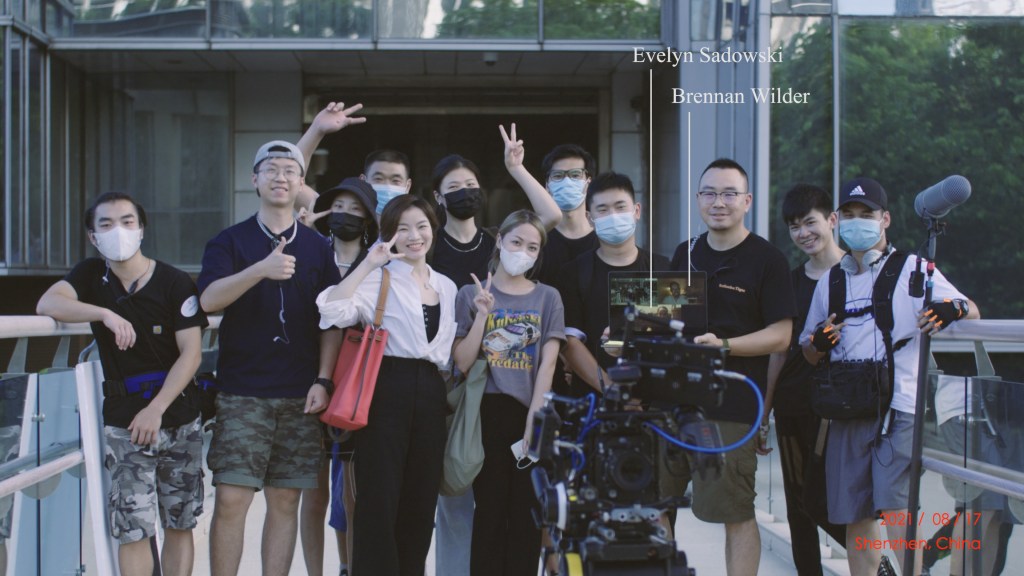
BTS of a Wall Street Journal x Huawei Project, 2021
China’s video production industry is rapidly growing and has become an essential hub for both local and international filmmakers. Whether you are shooting a film, documentary, TV show, or commercial, understanding the key terms used in China’s production industry can significantly improve communication and ensure smoother workflow. Here’s a comprehensive guide to 50 essential terms in China’s video production landscape.
1. 拍摄 (Pāi Shè) – Filming / Shooting
The process of capturing video footage. The term is used extensively on set.
2. 导演 (Dǎo Yǎn) – Director
The creative head of a project, responsible for guiding the production’s vision, performances, and the final output.
3. 制片人 (Zhì Piàn Rén) – Producer
Responsible for overseeing the production process, including budgeting, scheduling, and coordinating the crew.
4. 摄影师 (Shè Yǐng Shī) – Cinematographer / Director of Photography (DP)
The person responsible for the visual look of the film, including camera angles, shot composition, and lighting.
5. 剧本 (Jù Běn) – Script
The written blueprint for the film, including dialogue, stage directions, and scene descriptions.
6. 剧组 (Jù Zǔ) – Crew
The group of people working on a film or TV show, including directors, camera operators, sound engineers, and assistants.
7. 道具 (Dào Jù) – Props
Objects used by actors or placed within the scene to support the story or environment.
8. 剪辑 (Jiǎn Jí) – Editing
The process of selecting and arranging footage to create a cohesive narrative.
9. 后期 (Hòu Qī) – Post-Production
The phase after filming where the footage is edited, color graded, sound is mixed, and special effects are added.
10. 灯光 (Dēng Guāng) – Lighting
Refers to the setup and manipulation of lights to achieve the desired visual effect.
11. 镜头 (Jìng Tóu) – Shot
A continuous sequence of footage filmed by a single camera.
12. 拍摄角度 (Pāi Shè Jiǎo Dù) – Camera Angle
The position from which a camera captures a scene. Common angles include high, low, wide, and close-up shots.
13. 音效 (Yīn Xiào) – Sound Effects (SFX)
Sounds artificially created or enhanced in post-production to add realism or drama to a scene.
14. 配乐 (Pèi Yuè) – Film Score / Music
The music used to enhance the emotional impact and atmosphere of the film.
15. 调色 (Tiáo Sè) – Color Grading
The process of adjusting the colors in a video to match the desired visual tone or style.
16. 特效 (Tè Xiào) – Special Effects (SFX)
Visual effects used to create scenes that are difficult or impossible to achieve through regular filming, such as explosions or CGI.
17. 视觉特效 (Shì Jué Tè Xiào) – Visual Effects (VFX)
The digital manipulation of footage in post-production to create enhanced visuals or complex animations.
18. 画面 (Huà Miàn) – Frame
The visual composition or image captured by the camera. It can also refer to the aspect ratio of the footage.
19. 镜头语言 (Jìng Tóu Yǔ Yán) – Cinematic Language
Refers to the techniques used to convey meaning visually, including framing, camera movements, and shot composition.
20. 曝光 (Pù Guāng) – Exposure
The amount of light that reaches the camera’s sensor, determining how light or dark the image will be.
21. 长镜头 (Cháng Jìng Tóu) – Long Take
A scene shot in a single, unbroken take, often used for dramatic effect.
22. 短片 (Duǎn Piàn) – Short Film
A film that is shorter in duration, typically under 40 minutes.
23. 剧情片 (Jù Qíng Piàn) – Feature Film
A full-length movie, usually lasting more than 40 minutes.
24. 纪录片 (Jì Lù Piàn) – Documentary
A non-fiction film genre that provides factual information on a subject, event, or person.
25. 实时拍摄 (Shí Shí Pāi Shè) – Real-Time Filming
Refers to filming that takes place in real-time, such as live broadcasts or live-streaming.
26. 机位 (Jī Wèi) – Camera Position
The location or placement of the camera during filming.
27. 动作 (Dòng Zuò) – Action
The physical movement or sequence of events happening on screen, directed by the director and choreographed for the actors.
28. 演员 (Yǎn Yuán) – Actor / Actress
The individuals performing the roles in a film or TV production.
29. 演员表 (Yǎn Yuán Biǎo) – Cast List
A list of the actors and their corresponding roles in the production.
30. 台词 (Tái Cí) – Dialogue
The spoken words between characters in the film, part of the script.
31. 拍摄计划 (Pāi Shè Jì Huà) – Shooting Schedule
The timeline that outlines when and where each scene will be filmed during production.
32. 剧本分析 (Jù Běn Fēn Xī) – Script Analysis
The process of studying the script to understand its themes, characters, and narrative structure.
33. 剧照 (Jù Zhào) – Stills
Photographs taken on set, often used for promotional purposes or to capture key moments.
34. 录音 (Lù Yīn) – Audio Recording
The process of capturing sound during filming, including dialogue, ambient noise, and special effects.
A device used for capturing audio from actors during filming, without the limitation of cables.
36. 拍摄许可 (Pāi Shè Xǔ Kě) – Filming Permit
A legal authorization required to shoot in certain locations in China.
37. 外景 (Wài Jǐng) – Outdoor Location
A location for filming that is situated outside, usually involving natural settings or cityscapes.
38. 内景 (Nèi Jǐng) – Indoor Location
A location for filming that is inside a building or studio.
39. 布景 (Bù Jǐng) – Set Design
The creation of physical spaces and environments where the film’s action takes place.
40. 摄影机 (Shè Yǐng Jī) – Camera
The primary tool used to capture video footage. Different models are suited for different production types.
41. 滑轨 (Huá Guǐ) – Slider / Dana Dolley
A device that allows smooth horizontal camera movement, used for dynamic shots.
42. 无人机 (Wú Rén Jī) – Drone
An unmanned aerial vehicle used to capture aerial shots or sweeping wide-angle footage.
43. 摇臂 (Yáo Bì) – Crane
A mechanical arm used to move the camera vertically, offering sweeping, overhead shots.
44. 稳定器 (Wěn Dìng Qì) – Stabilizer
A tool designed to eliminate camera shake, ensuring smooth footage during movement.
45. 计划书 (Jì Huà Shū) – Production Plan
A detailed document that outlines every aspect of the production, including the shooting schedule, crew assignments, and logistics.
46. 演示 (Yǎn Shì) – Rehearsal
A practice session before filming where actors and crew go through the scenes.
47. 即时反馈 (Jí Shí Fǎn Kuì) – Real-Time Feedback
Feedback provided during the shooting process, allowing the crew to make adjustments immediately.
48. 原始素材 (Yuán Shǐ Sù Cái) – Raw Footage / Rushes
The unedited video footage captured during production before it undergoes any post-production work.
49. 影片版本 (Yǐng Piàn Bǎn Běn) – Film Cut
Refers to different versions of a film, such as the rough cut or final cut.
50. 剪接点 (Jiǎn Jiē Diǎn) – Edit Point
The place in the video timeline where one shot or scene transitions to another, also called a cut.
Conclusion
Knowing these 50 essential video production terms will help both local and international teams working in China communicate more effectively and navigate the complexities of the country’s video production environment. Whether you’re involved in the creative aspects of filmmaking or handling the technical side, these terms are key to understanding and excelling in the Chinese production landscape.
By mastering the language of video production in China, you can ensure that your project runs smoothly, from pre-production to post-production, while also fostering better collaboration with your team and local production partners.
Looking for reliable and professional video production services in China? Pixel Productions China is your ultimate partner, offering top-notch video production solutions tailored to your needs. As a leading China video fixer (Video Production Coordinator), we specialize in providing comprehensive services to ensure that your production process runs smoothly from start to finish. Whether you are a local brand or an international production house, our expertise and dedication to quality have made us the go-to choice for the world’s most respected brands.
Experience the difference with Pixel Productions China, where customer satisfaction and exceptional service are our top priorities. Contact us today and let us handle all the logistics, permitting, and on-ground support you need to bring your vision to life in China.





 CHINA VIDEO FIXER
Leave a Reply