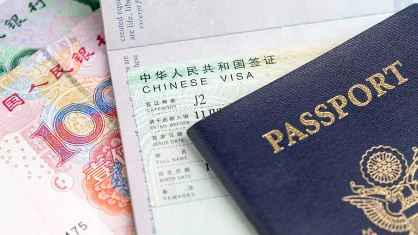
In recent years, more and more international film/video crews have come to mainland China for filming. Whether for news production, documentaries, TV shows, commercials, or feature films, the Chinese government has stringent regulations regarding foreign camera crews. This article will introduce the most commonly used visa types for filming in China.
A. Z Visa (Work Visa)
Who Should Apply:
- Film crew members who are employed for long-term work in China, such as directors, cinematographers, and other technical staff.
- Performance crew members like actors, actresses, and models.
When Needed:
- If the crew is part of a formal, paid production or has a contract with a Chinese production company.
Requirements:
- An invitation letter from the Chinese company or organization.
- Proof of employment and relevant qualifications.
- Health check and police clearance.
Example Costs by Country (Estimated):
- United States: $140 USD for a single-entry, 3-month work visa.
- United Kingdom: £120 to £150 GBP.
- India: ₹5,000 – ₹7,000 INR.
- Australia: Approximately $100 AUD for a single-entry visa.
- Canada: Around $100 – $150 CAD.
Steps to Apply for a Work Visa (Z Visa):
- Obtain the necessary documents (invitation letter, employment contract, medical clearance, police certificate).
- Submit the application at a Chinese consulate or embassy in your home country or via a visa agency.
- Pay the application fee based on the visa type and your country of residence.
- Wait for processing (usually 4–7 business days unless expedited).
- Pick up your visa or have it mailed to you.
Important Tip: Visa fees and policies can change, so it’s recommended to check with your local Chinese consulate or embassy, or a trusted visa agency for the latest information.
B. J2 Visa (Temporary Journalist Visa)
The J2 Visa is more specialized and requires assistance from the Chinese Association for Radio, Film, and TV Exchanges (CARFTE), which also manages and assists with the entire production process. This visa is commonly used for camera crews working on short-term filming projects in mainland China, including news, documentaries, TV shows, or commercials. It’s the only visa that legally permits filming in China.
Steps to Apply for a J2 Visa:
- Gather the necessary documents (invitation letter, production company portfolio, project introduction, detailed production schedule, crew members’ portfolios or websites).
- Note: The filming plan must be very detailed, especially if private locations or Chinese participants are involved. CARFTE will need to verify these details with phone calls.
- This process can take 2–3 weeks due to the extensive preparations.
- Submit the application at a Chinese consulate or embassy.
- Pay the application fee to CARFTE (calculated based on the days you are in China). Each person is charged $130 USD per day, and if you need to hire local staff, the same rate applies.
- Wait for processing (typically 4–7 business days unless expedited).
- Pick up your visa or have it mailed to you.
Advantages:
- CARFTE can assist in securing public shooting locations.
- It helps camera crews with professional, large equipment by liaising with customs.
Disadvantages:
- The application process takes longer and the cost is higher.
- Drone usage is prohibited, and occasionally police may visit to confirm filming details.
C. L Visa (Tourist Visa) and 240-Hour Transit Visa-Free
If your project has tight timelines and a small crew with light equipment, filming only in large Chinese cities, this visa may be sufficient. Many YouTubers also use this visa for filming in China. The requirements for the L Visa are readily available and straightforward.
Conclusion
Choosing the right visa for your camera crew is essential for smooth filming operations in China. The Z Visa is ideal for long-term work, J2 Visa is suited for short-term projects with CARFTE assistance, and L Visa is appropriate for small, light projects in urban areas. Understanding the visa requirements and preparing all necessary documentation will help ensure a successful filming experience in China.
Pixel Productions China: One of the best video production company in China
Looking for reliable and professional video production services in China? Pixel Productions China is your ultimate partner, offering top-notch video production solutions tailored to your needs. As a leading China video fixer (Video Production Coordinator), we specialize in providing comprehensive services to ensure that your production process runs smoothly from start to finish. Whether you are a local brand or an international production house, our expertise and dedication to quality have made us the go-to choice for the world’s most respected brands.
Experience the difference with Pixel Productions China, where customer satisfaction and exceptional service are our top priorities. Contact us today and let us handle all the logistics, permitting, and on-ground support you need to bring your vision to life in China.
Contact us : info@pixelprocn.com
FAQs on Video Production in China
1️⃣ What are the advantages of working with a Chinese video production company?
Chinese video production companies offer extensive local expertise, cost-effective solutions, and high-quality production services. They understand the market dynamics, local regulations, and cultural nuances, ensuring a smooth production process.
2️⃣ How do I find a reliable China video fixer for my project?
A reliable China video fixer should have a strong network, experience with international productions, and knowledge of permits, logistics, and local crew coordination. It’s best to work with established production coordinators who have a proven track record in managing foreign shoots.
3️⃣ What are the key factors to consider when hiring a Chinese video production company?
When choosing a Chinese video production company, consider their experience, portfolio, communication skills, language capabilities, and familiarity with both domestic and international production standards.
4️⃣ How does a China video production coordinator support international projects?
A China video production coordinator assists with pre-production planning, location scouting, securing permits, hiring local crew, renting equipment, and managing logistics, ensuring a seamless production experience.
5️⃣ What should I know about corporate video production in China?
Corporate video production in China requires an understanding of local business etiquette, branding strategies, and industry-specific messaging. It’s crucial to work with a team that can navigate cultural sensitivities while delivering compelling visual storytelling.
6️⃣ How do I ensure smooth post-production collaboration with a Chinese video production company?
To streamline post-production, use cloud-based file-sharing platforms compatible with China’s internet infrastructure. Ensure clear communication regarding editing styles, revisions, and final delivery formats.
Feel free to explore more insights below!
Multilingual Video Production Services in China
Innovative Solutions for Remote Video Production in China
What Type of Chinese Visa Should a Camera Crew Apply for?
Camera / Gear Rental in China: A Briefly Overview
Camera / Gear Rental in China: A Briefly Overview
Experienced Video Fixer & Production Support in Shanghai China
Experienced Video and Photo Fixer in Suzhou China
Experienced Fixer for Filming in Beijing China







 CHINA VIDEO FIXER
Leave a Reply